
There’s something quietly powerful about words that carry both weight and history, and “kroner” is definitley one of those terms that does exactly that. When you hear it, you might think of cold Nordic mornings, cozy cafes in Copenhagen, or the crisp banknotes changing hands in Oslo’s bustling streets.
But kroner is more than just money—it’s a thread woven through the cultural and economic identity of entire nations, a word that speaks to tradition, independence, and the unique character of Scandinavian countries.
Whether you’re planning a trip to Denmark, Norway, or Sweden, trying to understand currency exchange rates, or simply curious about linguistic quirks, this guide will walk you through everything you need to know about kroner in 2025.
The beauty of language lies in its ability to evolve while holding onto its roots, and the story of kroner captures this perfectly.
What Does Kroner Actually Mean
Let’s start with the basics, because even though it seems straightforward, there’s more nuance here than you’d expect. Kroner is the plural form of krone, which is the word for “crown” in Danish and Norwegian. In Swedish, it’s slightly different—they say krona (singular) and kronor (plural), but we’re getting ahead of ourselves here.
When we talk about kroner in everyday conversation, we’re usually refering to the currency used in Denmark and Norway. The Danish krone (DKK) and Norwegian krone (NOK) are the official currencies of these nations, and they’ve been around since the late 19th century. The Swedish krona (SEK) joined the party around the same time, though Swedes prefer their own spelling variation.
The term itself comes from the old monetary tradition of naming currency after crowns—symbols of royal authority and national sovereignty. Before kroner became the standard, these countries used various other currency systems like the Rigsdaler in Denmark, Speciedaler in Norway, and Riksdaler in Sweden. The shift to a unified system happened during the Scandinavian Monetary Union, which was established in 1873 when Sweden introduced its krona, followed by Denmark and Norway in 1875.
What makes this interesting is how the word kroner has become more than just a formal economic term—it’s casual money slang too. In Scandinavian countries, people might say “I need more kroner” the same way English speakers say “I need more bucks.” It’s got that informal, everyday quality that makes it feel lived-in and real.
Understanding the Different Types of Kroner Currency
Now here’s where things get a bit more complex, because not all kroner are created equal. Each country that uses this currency system has its own version, and they’re not interchangable even though they share a name.
The Danish krone is used in Denmark, Greenland, and the Faroe Islands. It’s subdivided into 100 øre, though you won’t see øre coins in circulation anymore since Denmark phased out small denominations. Danish banknotes come in 50, 100, 200, 500, and 1000 krone denominations, each featuring Danish bridges and landscapes that celebrate the nation’s infrastructure and natural beauty.
The Norwegian krone is Norway’s official currency and also divides into 100 øre. Norwegian bills include 50, 100, 200, 500, and 1000 krone notes, with designs showcasing Norwegian maritime heritage and coastal landscapes. What’s particularly interesting about Norwegian currency is how it reflects the country’s connection to the sea—you’ll find images of ships, lighthouses, and waves that tell stories of Norway’s seafaring tradition.
Sweden’s krona (remember, they spell both the singular and plural differently) operates on the same 100 öre subdivision system. Swedish banknotes feature cultural figures and important moments from Swedish history, coming in denominations of 20, 50, 100, 200, 500, and 1000 kronor.
Each of these currencies floats independently on international markets, meaning their values fluctuate seperately based on each country’s economic performance, interest rates, and global market conditions. This economic significance can’t be understated—despite sharing names and historical origins, these are distinct financial instruments with their own personalities in the global marketplace.
The Historical Journey of Kroner as Currency
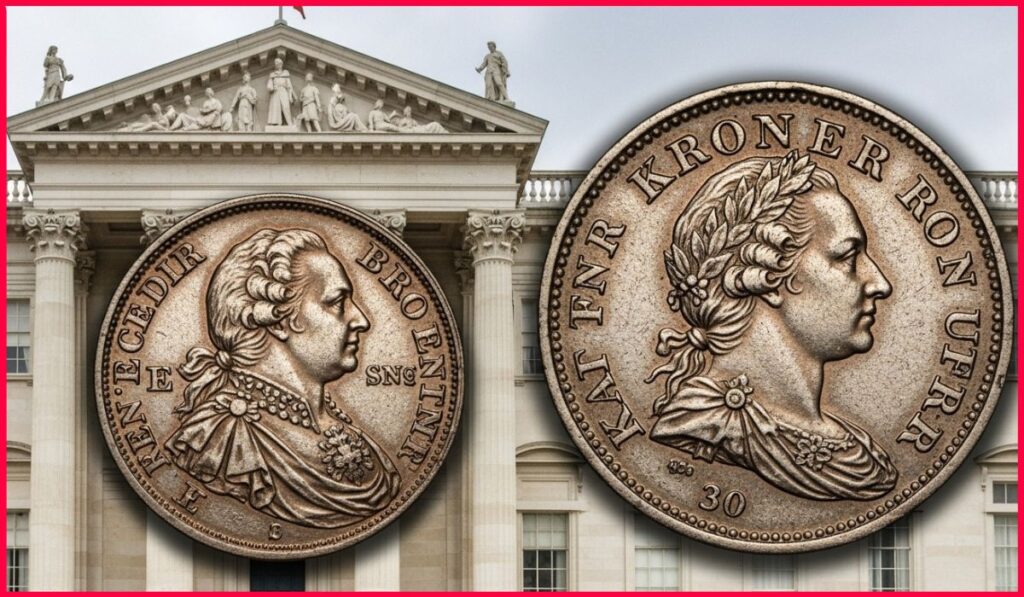
History has a way of shaping everything we use today, and the story of kroner is no exception. Before the modern currency system emerged, the Nordic countries had a patchwork of different monetary standards that made trade and commerce unnecessarily complicated.
The Scandinavian Monetary Union was basically an attempt to simplify things. Sweden kicked things off in 1873 by introducing the krona based on the gold standard, and Denmark and Norway followed suit in 1875. This wasn’t just about economics—it was about creating closer ties between these nations, fostering trade, and building a sense of shared Nordic identity.
The union worked relatively well until World War I disrupted everything. The war put enormous pressure on economies worldwide, and the gold standard became impossible to maintain. Each country started making independent monetary decisions, and by 1924, the union was officially dissolved. But the name stuck. Even after going their seperate ways economically, Denmark, Norway, and Sweden kept using kroner/kronor because the term had become part of their cultural identity.
What’s fascinating is how these currencies have evolved since then. They’ve survived multiple economic crises, adapted to modern banking systems, and transitioned into the digital age while maintaining their distinctive character. The historical monetary reforms that followed the union’s dissolution actually strengthened each currency’s individual identity, proving that sometimes going your own way is the best path forward.
How Kroner Functions in Modern Nordic Economies
In 2025, kroner remains vital to the economic identity of Scandinavia, even as digital payment methods and cryptocurrency challenge traditional currency concepts everywhere. The three kroner currencies are among the world’s most stable, backed by strong economies with robust social systems and high standards of living.
Denmark’s economy relies heavily on pharmaceuticals, renewable energy, and agriculture, and the Danish krone reflects this stability. Despite being part of the European Union, Denmark has maintained its own currency rather than adopting the euro, a decision that speaks volumes about national pride and monetary independence.
Norway’s krone is closely tied to the country’s massive oil and gas reserves. The Norwegian economy benefits from the Government Pension Fund Global (often called the oil fund), which invests petroleum revenues for future generations. This makes the Norwegian krone particularly sensitive to global energy markets, but also gives it a solid foundation that many currencies lack.
Sweden’s krona operates in an economy known for innovation, manufacturing, and technology. Swedish companies like Spotify, Volvo, and Ericsson contribute to a diverse economic base that keeps the krona relatively stable. Sweden also opted to keep its own currency despite EU membership, valuing monetary policy flexibility over eurozone integration.
The currency denominations you’ll encounter in daily life include coins in 1, 2, 5, 10, and 20 krone/krona values (though specific denominations vary by country), and banknotes as mentioned earlier. Modern Nordic countries have embraced cashless transactions enthusiastically—Sweden in particular is moving toward becoming a cashless society, where paying with cards or mobile apps is far more common than using physical kroner.
Understanding Kroner in Different Contexts Beyond Currency
Here’s where language gets really interesting, because “kroner” isn’t only about money. The way words take on multiple meanings depending on context is one of the most fascinating aspects of human communication, and this term demonstrates that beautifully.
While most people encountering “kroner” will think of Scandinavian currency first, the linguistic versatility of related terms deserves attention. The word “krone” (crown) appears in various contexts throughout Germanic languages, often representing authority, achievement, or pinnacle status. You might encounter it in historical titles, architectural terms, or even brand names that want to convey prestige and excellence.
Additionally, the phonetic qualities of the word itself interest linguists. The pronunciation involves vowel sounds that can be challenging for non-native speakers, and understanding these phonetics helps visitors to Denmark, Norway, or Sweden communicate more effectively. The slight variations in pronunciation between countries also reflect broader linguistic differences within the Scandinavian language family.
Common Confusions: Kroner, Krone, Krona, and Kronor
Let’s clear up some confusion that trips up even experienced travelers and currency traders. The relationship between these terms is straightforward once you understand the pattern, but it’s easy to mix them up initially.
Krone is singular in Danish and Norwegian. Kroner is the plural form used in these languages. So one krone, two kroner, ten kroner—you get the idea.
Krona is singular in Swedish. Kronor is the Swedish plural form. One krona, two kronor, fifty kronor.
The reason for this difference lies in how the three languages evolved seperately while maintaining similarities. Danish and Norwegian are more closely related to each other linguistically than either is to Swedish, which explains why they share the exact same singular/plural pattern. Swedish developed its own conventions, resulting in the “a to or” transformation instead of the “e to er” pattern.
When writing about currency exchange or discussing prices, precision matters. Using “Danish kroner” or “Norwegian kroner” is technically redundant (since kroner already implies plural Danish/Norwegian currency), but it’s common in English writing for clarity. Similarly, “Swedish kronor” appears frequently in English texts even though it’s somewhat redundant.
For travelers, knowing these distinctions helps avoid embarrassment when asking about prices. In Denmark or Norway, you’d say “Hvor meget koster det i kroner?” (How much does this cost in kroner?). In Sweden, you’d ask “Hur mycket kostar det i kronor?”
Practical Usage Tips for Handling Kroner
Whether you’re visiting Scandinavian countries for business or pleasure, understanding how to handle kroner practically makes your life significantly easier.
First, cash isn’t king in Scandinavia anymore—cards rule. Most establishments in Denmark, Norway, and Sweden prefer card payments, and many have gone completely cashless. However, having some physical kroner can be useful for small vendors, charity donations, or situations where technology fails you. ATMs are widely available in cities and accept international cards, though your bank may charge withdrawal fees.
Exchange rates fluctuate constantly, so checking current rates before exchanging money makes financial sense. Airport exchange services typically offer the worst rates, while local banks or dedicated currency exchange offices provide better deals. Many travelers find that simply using ATM cards to withdraw local currency offers competitive rates without hassle.
When looking at currency denominations, be aware that large bills can sometimes be problematic. A 1000 krone note might be difficult to break at small shops or food trucks. Keeping a mix of smaller banknotes like 50, 100, or 200 kroner makes transactions smoother.
Tipping culture in Scandinavian countries differs from American or British norms. Service charges are typically included in prices, so tipping isn’t obligatory, though rounding up or leaving small amounts (maybe 5-10%) for exceptional service is appreciated. This means you won’t need to constantly calculate percentages or have specific coin denominations ready.
Understanding rough price conversions helps you budget. As of 2025, one US dollar typically equals somewhere between 6-11 kroner depending on which currency we’re discussing (these rates change constantly, so verify current rates before traveling). Knowing approximate conversions prevents sticker shock and helps you determine whether you’re getting fair prices.
The Cultural Significance of Kroner Identity
Money represents more than economic transactions—it embodies national identity, history, and values. For Denmark, Norway, and Sweden, maintaining independent currencies rather than adopting the euro reflects pride in sovereignty and distinctive national character.
The designs on banknotes and coins tell stories about what each nation values. Danish currency celebrates engineering achievements and landscapes, connecting money to the physical infrastructure that supports society. Norwegian designs honor maritime tradition and coastal beauty, acknowledging the sea’s central role in national life. Swedish currency features cultural figures and historical moments, emphasizing the country’s contributions to literature, science, and arts.
This cultural and economic identity extends beyond government policy into everyday life. When Scandinavians handle their national currency, there’s an implicit connection to heritage and community. The decision to keep kroner/kronor rather than adopting the euro wasn’t merely economic—it was cultural, asserting that small nations can maintain independence even within larger political structures like the EU.
Young people growing up in these Nordic countries today interact with currency differently than previous generations did. Digital payments, mobile banking apps, and cryptocurrency discussions have changed the landscape dramatically. Yet the kroner endures, adapting to new technologies while maintaining its symbolic importance. Even as physical coins and banknotes become less common in daily transactions, the concept of kroner as national currency remains strong.
Beyond Finance: When Words Share Names
Language loves to recycle sounds and patterns, which occasionally creates interesting coincidences. While researching “kroner,” you might stumble across “hiatus”—a completely different word that demonstrates how semantic evolution works in fascinating ways.
A hiatus refers to a break, pause, or gap—concepts unrelated to currency but relevant when discussing interruptions or intervals. The term comes from Latin, where it originally meant “opening” or “gap.” In modern English, hiatus has developed multiple specialized meanings depending on context.
In linguistics, a hiatus describes the situation when two vowel sounds occur adjacent to each other without a consonant between them, creating a slight pause or gap in pronunciation. This phonetics term matters to language learners and helps explain why certain words feel awkward to pronounce. The technical aspects of phonetics and vowel sounds might seem distant from currency discussions, but they’re both examples of how specialized vocabulary develops within specific fields.
In anatomy, medical professionals talk about the esophageal hiatus (the opening in the diaphragm through which the esophagus passes) and aortic hiatus (the opening for the aorta). These medical terms use hiatus to describe physical gaps or openings in body structures.
Entertainment uses hiatus to describe when television shows take a break from regular programming—a television hiatus or broadcasting break means the show will return after a scheduled pause. Fans often dread hearing their favorite series is “going on hiatus,” which can mean anything from a few weeks off to indefinite downtime.
Professionally, people take various types of breaks: a sabbatical, leave of absence, or simply time off for rest and renewal. These breaks might be called intermissions, recesses, or adjournments depending on formality level. Having a breather suggests something more casual, while taking an adjournment sounds more official.
The point here isn’t that hiatus connects directly to kroner—it doesn’t. But both words demonstrate language’s richness and complexity. Just as kroner carries multiple cultural and economic meanings within Scandinavian contexts, words like hiatus take on different significance depending on whether you’re discussing television, anatomy, or linguistics. This linguistic versatility reminds us that understanding language requires attention to context, not just dictionary definitions.
Read this blog :https://noshcrafters.com/hy-meaning/
The Future of Kroner in a Changing World
Looking ahead, what does the future hold for kroner as currency? This question matters to economists, travelers, investors, and anyone interested in how money evolves.
Digital transformation poses both challenges and opportunities. Scandinavian countries have embraced digital banking and payment systems more enthusiastically than most regions, with Sweden leading the charge toward potentially becoming the world’s first cashless society. Physical banknotes and coins may eventually become relics, but the kroner concept will likely persist in digital form. Central bank digital currencies (CBDCs) are under consideration in all three countries, which would represent kroner’s evolution rather than its extinction.
The relationship with the euro remains complex. While Denmark, Norway, and Sweden maintain strong economic ties with eurozone countries, none seems likely to abandon their kroner currencies anytime soon. Public opinion in these countries generally favors monetary independence, viewing their own currencies as important aspects of national sovereignty. This stance has proven economically sound—having independent monetary policy allowed these countries to respond flexibly to economic challenges like the 2008 financial crisis and COVID-19 pandemic.
Climate change and sustainability initiatives may influence currency stability. Norway’s economy remains heavily dependent on fossil fuel exports, which creates both short-term strength and long-term uncertainty as the world transitions toward renewable energy. How Norway manages this transition will significantly impact the Norwegian krone’s future stability. Denmark has positioned itself as a renewable energy leader, particularly in wind power, which may provide economic stability as global energy markets shift.
Technological innovation continues reshaping how people think about and use money. Cryptocurrency enthusiasts sometimes question whether traditional currencies like kroner have a future, but the stability, government backing, and established trust in Scandinavian currencies suggest they’ll adapt rather than disappear. The integration of traditional currency systems with new payment technologies probably represents the future rather than wholesale replacement.
Making Your Wishes Personal: Connecting Through Understanding
Understanding kroner—whether you’re traveling, conducting business, or simply expanding your knowledge—creates connections across cultural boundaries. When you take the time to learn about another country’s currency, you’re really learning about their values, history, and identity.
For travelers planning Scandinavian adventures, this knowledge transforms from academic to practical quickly. Knowing that the 50 krone note in your pocket represents more than just purchasing power—it carries stories of historical monetary reforms, national pride, and cultural distinctiveness—enriches your experience. Suddenly, that coffee you’re buying in Oslo isn’t just a transaction; it’s participation in living history.
For those working internationally, understanding the nuances of Danish krone (DKK), Norwegian krone (NOK), and Swedish krona (SEK) prevents confusion and demonstrates respect for local culture. Taking time to use correct plural forms (kroner vs kronor) signals attention to detail and cultural awareness.
Even for people who never expect to handle physical kroner, understanding how different currency systems work broadens perspective. It challenges assumptions about money’s universality and reminds us that economic systems reflect cultural choices rather than inevitable natural laws.
Crafting Your Own Currency Knowledge Journey
So where do you go from here? How do you deepen your understanding and make this knowledge practical rather than merely theoretical?
Start by following currency exchange rates if you have any interest in travel or investment. Watching how the Danish krone, Norwegian krone, and Swedish krona fluctuate against your local currency provides insights into global economics. Apps and websites offer free tracking services that turn abstract concepts into tangible daily information.
Engage with Scandinavian media, even if just occasionally. Reading news from Denmark, Norway, or Sweden (many publications offer English versions) helps you understand economic contexts and how currency discussions appear in local discourse. You’ll develop appreciation for how people in these countries think about their money differently than Americans or British people think about dollars or pounds.
Consider learning basic phrases in Danish, Norwegian, or Swedish. Understanding how to ask prices, count money, and discuss financial matters in local languages creates much richer travel experiences and demonstrates respect for local culture. The pronunciation challenges with terms like kroner also provide excellent entry points into broader language learning.
Share what you’ve learned. When friends mention Scandinavian travel plans, you can offer practical advice about currency handling. When colleagues discuss international business, you can contribute knowledge about Nordic economic systems. Teaching others reinforces your own understanding while spreading cultural awareness.
Connect with people from Denmark, Norway, or Sweden if possible. Nothing replaces direct conversation with someone who uses kroner daily. Their insights about how currency functions in everyday life, what denominations they actually use, and how digital payment has changed their relationship with money provide perspectives no article can fully capture.
Final Reflections on Currency and Connection
Money talks, as the saying goes, but what it says varies tremendously depending on where you’re listening. The story of kroner is really the story of how three nations navigated between cooperation and independence, between shared heritage and distinct identity, between tradition and innovation.
In 2025, as we navigate an increasingly connected yet persistently diverse world, understanding these distinctions matters more than ever. The kroner currencies of Scandinavia remind us that small nations can maintain independence while participating fully in global systems. They demonstrate that cultural identity can coexist with economic integration. They prove that tradition doesn’t require stagnation—currencies can evolve while honoring their roots.
Whether you’re planning to visit Denmark’s historic streets, Norway’s dramatic fjords, or Sweden’s innovative cities, or whether you’re simply curious about how other parts of the world organize economic life, understanding kroner opens doors. It transforms abstract economic concepts into tangible human stories. It connects you to centuries of history compressed into modern banknotes and digital transactions.
Frequently Asked Questions
what is a kroner
Kroner is the plural form of “krone,” a currency used in several Scandinavian countries. It literally means “crown.”
define kroner
Kroner refers to multiple units of the Nordic currency “krone,” used in countries like Denmark and Norway.
what does kroner mean
Kroner means “crowns” and is used to describe the official currency in certain Nordic nations.
what is kroner
Kroner is the plural term for “krone,” the money used in Denmark, Norway, and sometimes referenced for Sweden’s “krona.”
what country is kroner from
Kroner is from Denmark and Norway, where the official currencies are the Danish krone and Norwegian krone.

Food lover, recipe creator & the heart behind NoshCrafters.com. Olivia shares mouthwatering, easy-to-make dishes that turn everyday meals into unforgettable bites. When she’s not experimenting in the kitchen, she’s busy plating up inspiration for home cooks everywhere.