
There are stories in the criminal world that feel like they were scribbled on the edges of fate, half-truths and half-tragedies tangled together in ways the heart kinda struggles to understand. And the life of Uber Trujillo is exactly like that—one of those names whispered in documentaries, tucked into the darker lines of books, or dropped casually in crime articles by folks who think they already know the ending.
But the truth is, this young man lived inside a storm he never fully choose, and some People still argue about whether he ever had a real chance to step outside the shadows built long before he was old enough to even spell the word “escape.”
His story is not only stitched to his own choices but to the enormous shadow of his mother, Griselda Blanco, the infamous “Godmother of Cocaine”, whose empire stretched across Colombia, Mexico, and the United States during the late 1960s, 1970s, and the bloody 1980s. And yet, when we zoom the lens just a lil bit closer, we see something painfully human: a kid growing up inside a notorious family, shaped by secrets, ambitions, and a violent world swirling loud around him.
Key Facts About Uber Trujillo
| Category | Details |
|---|---|
| Full Name | Uber Trujillo |
| Known For | Being the son of Griselda Blanco, the “Godmother of Cocaine” |
| Family Background | Part of a notorious family deeply involved in the cocaine trade and organized crime |
| Mother | Griselda Blanco, Colombian drug lord and cartel figure |
| Siblings | One of four sons; all connected to the Blanco–Trujillo criminal lineage |
| Era of Significance | Lived during the late 1960s, 1970s, 1980s, and events continued to echo into the 2000s |
| Nationality / Locations | Tied to Colombia, Mexico, and the United States due to cartel movements |
| Criminal Involvement | Grew up inside a world of drug smuggling, cocaine trafficking, and cartel rivalries |
| Key Association | Involved in events surrounding the expansion of the Blanco drug empire |
| Cause of Tragedy | Caught in violent aftermath and dangers of the drug trade |
| Death | Known for the murder of Uber Trujillo, often linked to ongoing cartel conflicts before 2001 |
| Media Presence | Appears in documentaries, books, articles, and true-crime discussions |
| LSI Keywords Context | Connected to narco-family tragedies, Miami drug wars, Medellín drug operations, and criminal lifestyle consequences |
| Legacy | Symbol of the psychological impact of cartel life on children and the harsh cost of growing up in a criminal family legacy |
The Boy Born Into a Stormy Legacy
Whenever folks mention Griselda Blanco, they jump straight to the wild tales—drug smuggling routes, assassination orders, luxury homes, the expansion of a terrifying drug empire, and the cold efficiency that built her nickname as the Godmother of Cocaine. But tucked under those headlines was a small kid named Uber Trujillo, one of her four sons, each one pulled into the orbit of the criminal universe she ruled with fists and fear.
He came into the world at a moment when the Medellín underworld was rising like a monster waking from sleep. The cocaine trade, once tiny and quiet, was exploding into a billion-dollar beast, rewriting the map of power inside Colombian drug networks. And Uber, along with his siblings, grew up in the same rooms where plans for cocaine trafficking were whispered like bedtime stories.
Some families pass down recipes or lullabies. The Trujillos got organized crime, drug dealing, and enemies carrying guns with names scratched off. A heavy inheritance, no? Makes the chest ache if you think too long about it.
Growing Up in the Shadow of the Cocaine Godmother

Life under Griselda Blanco wasn’t like a normal family, not even close. It was a place where every corner felt wired with tension. One minute, you’re laughing over breakfast, and the next, someone’s rushing the family into hiding because a rival cartel decided today is a good day for bullets.
The boy learned early that trust was like glass—easy to break, dangerous to hold. Folks who studied this era often say the psychological impact of cartel life is something we still underestimate. Children growing up around drug dealing, drug smuggling, and constant paranoia end up feeling older than their years, like their childhood gets snatched while they not even looking.
And Uber? He carried all that weight. Sometimes too quietly, sometimes too recklessly.
The Family That Moved Like Shadows
When the Medellín drug operations began hitting headlines, the Trujillo surname—Trujillo—was already known in certain circles. Not as a location, but as a symbol of a rising criminal family legacy, one fueled by the ambitions of a woman who treated loyalty like currency.
The family moved across borders—Colombia, Mexico, and finally the United States—shifting their lives to match the pulse of the cocaine trafficking era. For Uber, that meant learning to restart life over and over, new schools, new faces, new danger each time.
Sometimes people in Miami back then even joked that the Blanco household had more bodyguards than some embassies. Funny in the moment, chilling the second you think deeper.
The Violent Web of the 1970s and 1980s
You can’t talk about Uber without talking about the wider storm swirling through the 1970s and 1980s, when Miami drug wars connection turned the city into something that felt part-Hollywood, part-nightmare.
Shootouts in shopping malls. Cars exploding for reasons everyone pretended not to know. Rumors slipping like ghosts through neighborhoods where families were scared to blink too loudly.
And tucked somewhere in that violent whirlwind was a boy growing into a man—confused, pressured, trying to shape his identity while metal and money clashed around him.
Uber Trujillo and the Criminal Gravity He Couldn’t Escape
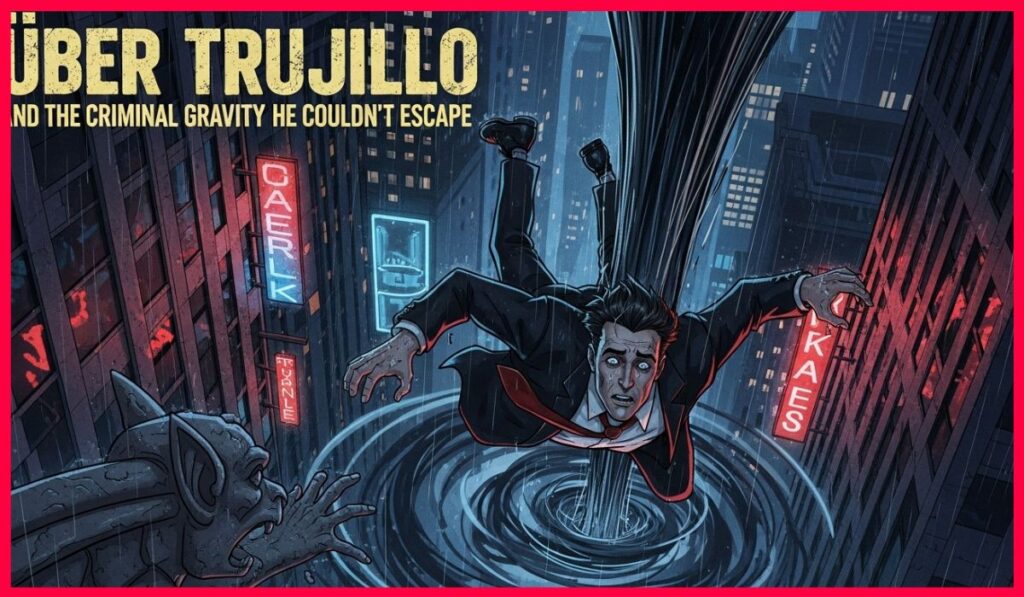
Some folks argue that Uber made his own bed when he got tangled in his mother’s criminal activities. Others say he never had a real choice, that the intergenerational cycle of violence inside narco-culture pulled him deeper than he meant to go.
He tried to carve his own place in the organized crime world, but he wasn’t built like his mother. Her ruthlessness was a sharpened knife; his was more like a dull blade he wasn’t sure how to hold.
Older interviews from people who knew the family whisper that Uber wanted something quieter, maybe even something like a normal life—but normalcy is a luxury that narco sons rarely receive.
The Murder of Uber Trujillo: A Heartbreaking Ending
The part that still shakes readers, viewers, and researchers—or simple curious minds—is the ending. The murder of Uber Trujillo didn’t just close a chapter; it slammed a door on a young life that barely had time to figure itself out.
His death, sometime before 2001, is often described as one dot in the violent aftermath of the Blanco empire. But it wasn’t just a dot. It was a loud reminder of the dangers of drug trafficking, the cruel consequences of cartel life, and the violent repercussions of cartel disputes that don’t care how young or fragile a person is.
In the ongoing drug-related conflicts, his passing became another sad line in the story of a family that both ruled and was ruined by the underworld.
Read this Blog: https://noshcrafters.com/wtw-meaning/
How Media Keeps Telling His Story (Sometimes Wrongly)
Netflix shows, documentaries, crime books, and sensational articles sometimes twist his story to make it more dramatic, more TV-friendly. They show Uber as either a villain or a victim, rarely as the boy caught in the middle.
Even pop culture names like Ice Spice get thrown into these references when modern media tries to connect new audiences to older narco tales. It’s weird, a lil messy, and shows how storytelling sometimes forgets the real humans under the headlines.
But true true crime stories—the ones handled with care—remind us that narco families were not just criminals, but also messy, hurting humans trying to survive a world they didn’t fully control.
Lessons Wrapped Inside a Tragic Life
If there’s something Uber’s life whispers, it’s this: growing up inside a criminal shadow upbringing shapes the heart in ways outsiders rarely understand. The organized crime impact on families isn’t just about money and power; it’s about fear, loss, grief, and futures that burn out too fast.
Parents, siblings, even uncles and godparents—everyone in such a family involved in narcotics trade pays a price. Some pay with their peace. Others pay with their lives.
And Uber, sadly, paid with both.
Why His Story Still Matters Today
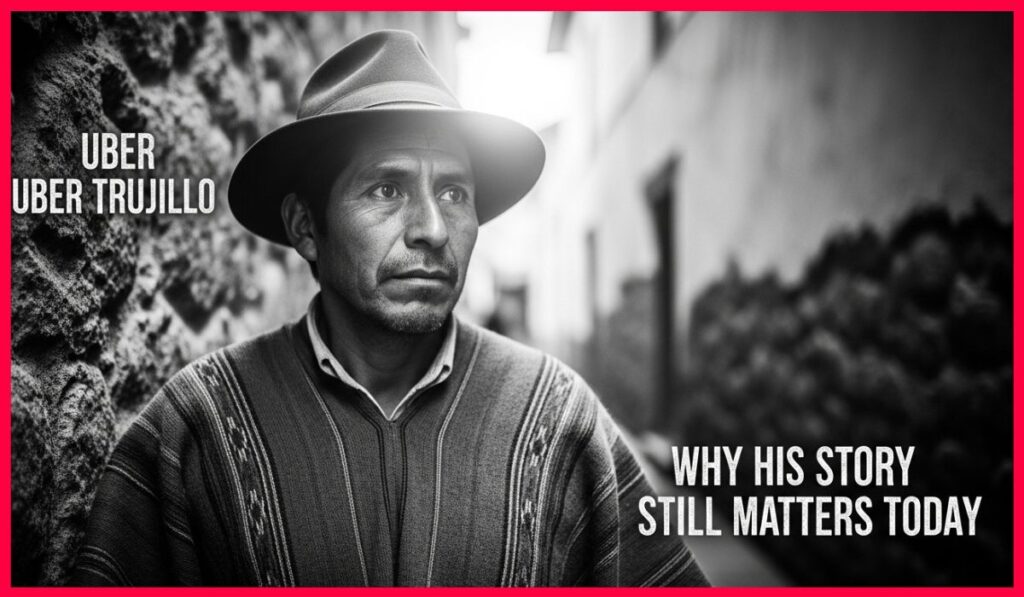
In Mexico, in Colombia, in parts of the United States, you can still see the marks of cross-border trafficking routes and the scars of decades-long drug lord rivalries. Uber’s story fits into that bigger map—not because he changed the world, but because the world changed him before he even knew how to fight back.
His biography has become part of narco history classrooms, criminology case studies, and whispered warnings within communities wrestling with cartel-related assassinations.
His story is not a celebration of crime. It is a caution sign standing in the ruins of a family’s ambition.
A Human Ending to a Brutal Tale
When you step back and look at the whole picture, Uber Trujillo’s life feels like a cracked mirror—reflecting pieces of childhood, danger, confusion, loyalty, and fear. A young man raised in the belly of a violent empire, trying to find his own shape in a world already writing his ending for him.
And even if history books treat him like a footnote in the legend of Griselda Blanco, the echoes of his short life still ask quiet questions about the cost of involvement in the drug trade, the fragile threads that hold families together, and the heartbreaking truth that some kids grow up paying debts they never created.
Freqeuntly Asked Questions
1. Who was Uber Trujillo?
Uber Trujillo was one of the four sons of Griselda Blanco, the infamous “Godmother of Cocaine,” and grew up inside her violent criminal world.
2. How was Uber Trujillo connected to the cocaine trade?
He was raised within a family deeply involved in drug smuggling and cartel activities, which influenced many parts of his life.
3. What happened to Uber Trujillo?
He was murdered during ongoing drug-related conflicts, becoming another tragic victim of cartel violence.
4. Why is Uber Trujillo mentioned in media and documentaries?
His story appears in books, articles, and narco documentaries because of his connection to Griselda Blanco and the broader cocaine empire.
5. What does his story represent today?
It symbolizes the heavy cost of growing up in a criminal family legacy and the dangers tied to the drug trafficking world.
Food lover, recipe creator & the heart behind NoshCrafters.com. Olivia shares mouthwatering, easy-to-make dishes that turn everyday meals into unforgettable bites. When she’s not experimenting in the kitchen, she’s busy plating up inspiration for home cooks everywhere.