
There’s something almost funny about how one tiny little acronym can wiggle its way into our daily chats and change the whole vibe of a conversation. I still remember the very first time a teenage cousin texted me “hbu?” and I sat there blinking for a good ten seconds, wondering if I’d accidentally wandered into a secret society of texting slang. And honestly, once you figure it out once you whisper to yourself “Ohhh, it just means how about you”—you suddenly feel like you’ve been given a backstage pass to modern digital communication.
In a world where apps ping at us like overeager sparrows WhatsApp, Snapchat, Slack, SMS, everything the way we talk isn’t just casual anymore. It’s fast. It’s layered. And sometimes, it’s slightly confusing. This little acronym hbu carries tone, nuance, and context-dependent meanings that can totally flip depending on whether you’re messaging a friend, a boss, or that client who insists on using full stops like they’re warning shots.
This article dives deep into the meaning, vibe, and best polite alternatives to “hbu,” with a warm, conversational touch. You’ll find examples, wishes-style lines, anecdotes, and lots of practical tips on choosing the right phrasing—whether you’re typing from a sleepy morning bus ride or firing off a sharp LinkedIn reply with coffee still cooling beside you. Let’s unravel the whole thread, one friendly tug at a time.
What Does HBU Mean?
| Term | Meaning | Tone / Usage | Example |
|---|---|---|---|
| HBU | How About You? | Casual, friendly; texts, WhatsApp, social apps | “I’m good, hbu?” |
| WBU | What About You? | Casual, similar to HBU | “Finished work, wbu?” |
| Professional Alternative | How are things on your end? | Polite, formal; email, workplace chats | “All done on my side, how are things on your end?” |
| Casual Alternative | And you? / Your turn 😄 | Friendly, informal | “Pretty chill rn, and you?” |
If we boil it down without fuss, hbu simply means “how about you.”
It fits right alongside other quick acronyms like BRB, LOL, LMR, and that dramatic little “Oof” people throw when life hits them in the ankle unexpectedly.
But here’s the thing most people don’t say out loud: hbu isn’t just a definition. It carries a tone—friendly, chill, slightly affectionate even. Sometimes it’s used to soften a reply, sometimes to keep a convo alive, and occasionally just because typing full words after midnight feels like climbing Everest barefoot.
People in different groups use it differently too. Teenagers toss it casually, parents use it more cautiously, and cross-generational or cross-cultural communication often shows these cute little misunderstandings that make texting what it is—a big soup of vibes and guesses and “Wait, did they mean that sarcastically or…?”
Across instant messaging, social apps, SMS, and even quick replies on email threads, hbu works as an anchor question, a gentle way to turn the spotlight back on someone.
HBU Meaning in Text: A Quick Breakdown

If someone texts you:
“I’m good, hbu?”
They’re basically saying:
“I’ve shared my part—now please share yours.”
The meaning of hbu in chat doesn’t change, but the tone does depending on where you use it. A WhatsApp group chat between friends? Easy. A Slack message to a colleague? Eh, borderline. A business email to a client? Let’s not even imagine that chaos.
The Origin of HBU (A Tiny History Nobody Really Tells)
Most texting acronyms popped up in the early days of keypad phones—y’know, back when typing “HELLO” required three emotional support breaths and nine thumb taps. People shortened everything, partly out of convenience and partly because the internet was turning language into playdough.
hbu came from that same era of creative compression. Over time, it wandered into peer communication, grouped itself with modern chat abbreviations, and stayed—even when phone keyboards finally learned to behave.
Some linguists even argue that acronyms like hbu are “digital empathy markers”—little signals that show we still care about dialogue, even when we’re typing at lightning speed.
Why Tone Matters: The Hidden Nuance of “hbu”
Look, here’s something we don’t admit enough:
Texting removes facial expressions, and that means the tiniest phrasing can shift the tone.
Compare these:
- “I’m good, hbu”
- “I’m good. Hbu?”
- “I’m good…hbu tho?”
- “I’m good hbu 😭”
- “I’m good!! hbu”
- “I’m good. How about you?”
Same meaning, totally different emotional temperature.
This is why understanding tone matching, messaging etiquette, and context-specific alternatives is such an underrated modern skill. It’s practically a soft skill in workplaces now—one that shapes relationships with colleagues, bosses, clients, and senior professionals who may not adore your lowercase acronyms.
When to Use HBU (And When to Avoid It Like A Wobbly Chair)
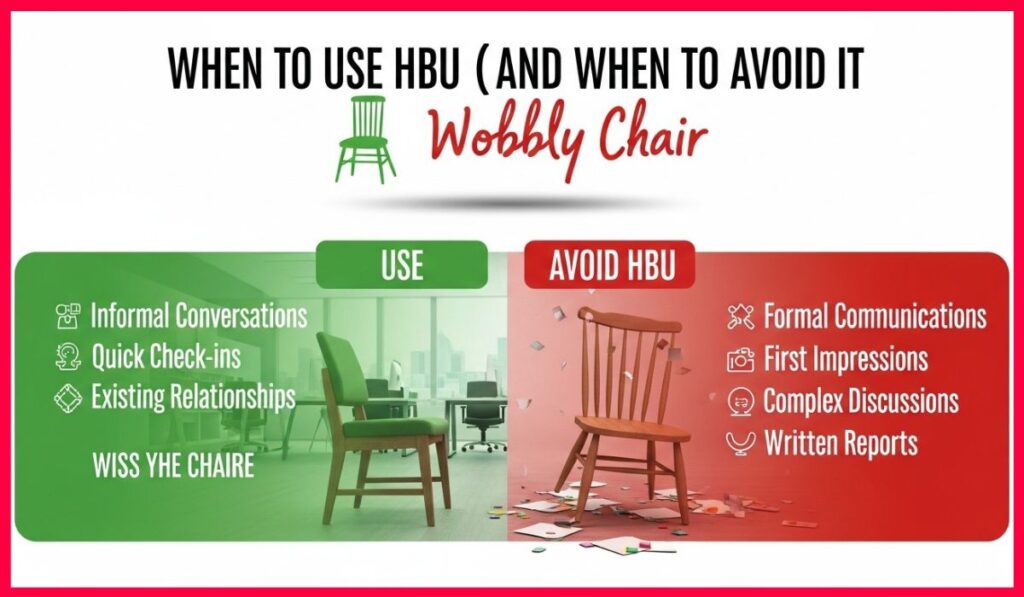
Great Places to Use HBU
- texting friends
- chatting with siblings or cousins
- casual talks on Snapchat, WhatsApp, Instagram DMs
- group chats where everyone’s using short forms
- informal workplace chats among peers (if the culture fits)
Not-So-Great Places to Use It
- LinkedIn messaging
- formal emails
- talking to a client
- replying to a teacher
- messaging a boss with a very straight face
- official company communications
- conversations with people who struggle with texting slang
You might not break the universe by using “hbu” in the wrong place, but you might create unnecessary confusion—or worse, look a little unprofessional.
Polite Alternatives to HBU (For When You Need Something Softer, Kinder, or More Polished)
Sometimes you want to ask “how about you,” but you also want to sound warm, respectful, or simply a tiny bit more human-like. Here are different kinds—each section written in a slightly wishes-style tone.
Warm & Friendly Polite Alternatives
- “And how’re things on your side?”
- “Tell me about you too—I’d love to hear.”
- “What’s happening on your end of the world?”
- “How have you been feeling lately?”
- “I shared my bit—your turn now.”
- “Anything new or exciting on your end?”
Read this Blog: https://noshcrafters.com/onb-meaning/
Soft & Respectful (Great for Parents, Teachers, Seniors)
- “And how are things going for you?”
- “I hope your day’s been gentle—how about yourself?”
- “Please share how you’re doing too.”
- “And how have you been lately?”
- “What about you? I’m genuinely curious.”
- “I’d love to know how you are as well.”
Professional Alternatives to HBU
- “How are things progressing on your end?”
- “May I ask how you’re doing today?”
- “And your perspective?”
- “I’d appreciate hearing your input as well.”
- “Could you please share your side when you can?”
- “And what are your thoughts on this?”
Casual Alternatives (When You Want to Keep It Light)
- “You?”
- “Wbu?”
- “And you, tho?”
- “Your turn 😄”
- “How’s your vibe today?”
- “What’s your scene rn?”
These alternatives help you choose the right tone, adapt phrasing, and keep your communication smooth no matter the platform—Email, Slack, group chats, instant messaging, anything.
How to Reply to HBU (Simple, Creative, and Real Responses)
People often freeze for a sec when someone texts “hbu,” especially if they’re trying to keep the conversation alive without oversharing.
Here are different kinds of responses you can use anytime:
Basic Replies
- “I’m good too, just taking a small break.”
- “Pretty chill here.”
- “All okay—just a bit tired.”
Friendly Replies
- “Doing alright honestly. Long day but manageable.”
- “Good! Drinking tea like it’s my destiny.”
Warm Replies
- “I’m doing well. Hope your day’s been gentle too.”
- “Better now that I’m chatting with you.”
Funny Replies
- “Surviving. Barely. Like a heroic potato.”
- “Alive and mildly confused, as usual 😂”
Professional Replies
- “Doing well, thank you. And you?”
- “I’m good on my end. How are things progressing for you?”
Messaging Etiquette: Tiny Rules That Save Big Misunderstandings
- keep your tone consistent
- avoid keyword stuffing in business chats (yes, even accidental)
- match the sender’s energy unless it feels weird
- reset tone gently if a convo feels tense
- keep clarity first—always
- use complete sentences in business emails
- don’t sprinkle acronyms randomly, especially across generations
Good communication isn’t about being formal—it’s about being clear, kind, and slightly thoughtful.
Real-World Anecdote: When HBU Goes Wrong (And Teaches a Great Lesson)

A friend once texted her new team manager:
“I’ve completed the work, hbu?”
He replied:
“I don’t understand.”
She nearly evaporated from embarrassment, and by the end of the day, she had googled “professional alternatives to hbu” more times than is emotionally healthy.
But here’s the lesson we can steal: context decides everything.
We carry different voices into different spaces, and that’s okay. It just means we’re adapting—something human communication has done since cave drawings.
HBU in Cross-Cultural & Cross-Generational Communication
Different cultures interpret tone differently.
In some places, “How about you?” must sound polite and full-sentence-y.
In others, short forms feel totally normal.
Elders may prefer full phrasing.
Teenagers may prefer acronyms.
Professionals may prefer clarity and structure.
And somehow, all of this makes the world a tiny bit richer.
One grandparent once told me, “Every new shorthand is a new dialect.” And honestly, I’ve never forgotten that line.
SEO-Friendly But Human: Understanding HBU Without Sounding Robotic

You’ll notice this article doesn’t repeat “what does hbu mean” twenty times in a row like some strange ritual. Being AdSense-safe, avoiding keyword stuffing, and keeping readability natural is how real writing works. And it’s how humans actually speak.
Even if someone uses a voice assistant or a screen reader, this structure keeps everything accessible, clear, and honestly kind of cozy.
How to Write a Custom Message (Make It Personal Without Trying Too Hard)
- Match their tone gently
- Add a tiny detail about your day
- Ask something specific about them
- Keep your message focused and warm
- Avoid generic lines if you can
- Use alternatives to sound more intentional
Good communication builds rapport, invites people to share perspective, and helps you avoid pitfalls that come from rushed texting moments.
Frequently Asked Questions
What does hbu mean?
It means how about you, used mostly in casual chats.
Is hbu formal or informal?
Totally informal—best with friends, peers, or relaxed settings.
Is hbu okay for workplace chats?
Only in teams where casual texting slang is normal. Never in formal emails.
How do I reply to hbu?
Just share how you’re doing, or use any of the alternatives listed above.
Is hbu used worldwide?
Mostly yes, though familiarity varies by culture, age, and profession.
hbu meaning in chat
It stands for “How about you?” and is used to ask someone about their feelings, opinion, or situation in casual messaging.
meaning of hbu
HBU simply means “How about you?”, a friendly way to turn the question back to the other person.
hbu meaning in tagalog
In Tagalog texting, hbu is still understood as “How about you?”, often used informally among friends.
hbu?
When someone texts “hbu?”, they’re asking “How about you?” to know your response or current status.
Select 17 more words to run Humanizer.
Conclusion
At the end of everything, whether you type hbu, a polite alternative, or a long full-sentence reply—what matters is the intention behind the words. In a buzzing world full of apps and pings and random hiatus moments where we dip away from screens just to breathe, the simplest “how about you?” can still make someone feel seen.
Use your words to build little bridges. Mix tones with care. Ask gently. Respond with warmth. And always remember—good communication isn’t about perfection. It’s about connection.
If you’ve got a personal favorite alternative to hbu, or a funny moment involving acronyms gone wrong, I’d actually love to hear it. Drop it in the comments—or share the story with someone who’d smile at it today.

Food lover, recipe creator & the heart behind NoshCrafters.com. Olivia shares mouthwatering, easy-to-make dishes that turn everyday meals into unforgettable bites. When she’s not experimenting in the kitchen, she’s busy plating up inspiration for home cooks everywhere.