
There’s something kinda magnetic about words that carry stories behind them, words that aren’t just words but little passports to culture, history, and sometimes danger. Goodfella is one of those words. You’ve probably heard it tossed around in movies, in memes, in casual conversations among friends who want to sound slick.
But peel back the layers, and it’s a lot more than a catchy term—it’s a portal into loyalty, respect, and a very peculiar kind of moral universe. Whether you’ve seen Martin Scorsese’s Goodfellas (1990 film) a dozen times or just caught snippets online, the meaning of Goodfella isn’t just cinematic—it’s cultural, historical, and linguistically rich.
Let’s wander together through the streets of New York, past the neon-lit diners, and into the world of Italian-American gangsters (fictional context from Goodfellas). Here, being a Goodfella isn’t just about being “good”—it’s about trust, loyalty, and sometimes walking the razor-thin line of morally ambiguous behavior. Buckle up, we’re diving deep.
What Does “Goodfella” Really Mean?
At its heart, a Goodfella is a man—or sometimes, in a looser sense, a person—who commands respect within a tight social circle. The phrase originated from good fellow, a simple way to call someone a decent, trustworthy person. Over time, in movies / pop culture and street slang, it evolved into something much heavier. Among the Mafia / crime families, a Goodfella often denotes someone who is part of the inner circle, a made man, someone whose loyalty, trust, and camaraderie are unquestionable.
In casual conversation, however, calling someone a Goodfella can be playful, respectful, or even affectionate. Imagine texting a pal: “Thanks for helping me move, you’re a real Goodfella.” The slang has this fluidity, moving between tough guy mythology and everyday camaraderie.
Origins of the Term: From Gentleman to Goodfella
Believe it or not, the etymology of Goodfella is kinda charming. It starts with the innocent good fellow, literally meaning a man of character, respectable, reliable. Over decades, this harmless term got tangled up with organized crime connotation in New York, especially through the lens of Hollywood. The Mafia influence morphed it into something almost sacred in that underground world: a person bound by code of honor, loyalty, and dependability.
Movies often cemented this: Martin Scorsese painted a world where street smarts, toughness, and masculinity were packaged in slick suits and fast talk. Suddenly, calling someone a Goodfella could evoke images of the tight-knit circle, of whispered deals over coffee, of a silent nod signaling mutual respect.
Goodfella in Movies and Pop Culture
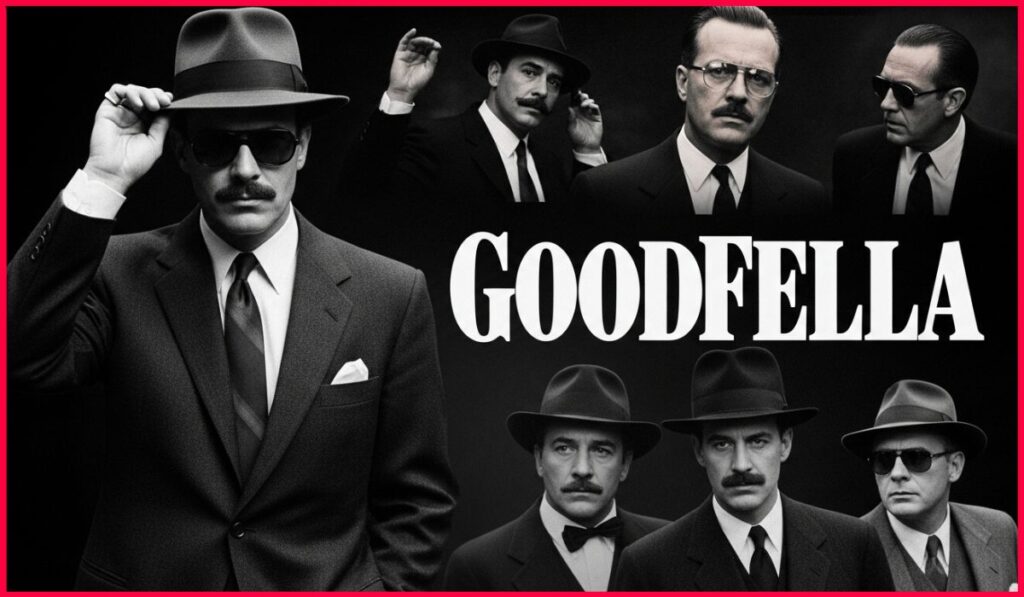
If you’ve ever watched Goodfellas (1990 film), you know that the movie isn’t just a gangster story—it’s a lens into brotherhood and camaraderie, the code that binds men who operate outside the law. Ray Liotta, Robert De Niro, and Joe Pesci don’t just play characters—they embody an entire vocabulary of gestures, expressions, and morally ambiguous behavior that Hollywood crystallized as “being a Goodfella.”
The term has since spilled into social media posts, casual memes, and even work/business settings as a playful way to recognize someone’s reliability or street-wise savvy. People throw it around in informal chats: “He’s my Goodfella, always got my back,” turning cinematic legend into everyday trust.
The Qualities of a True Goodfella
So what makes someone a Goodfella? It’s more than just swagger and leather jackets. Some key traits include:
- Trust: You can rely on them to keep secrets, watch your back, or make the hard calls.
- Loyalty: Through thick, thin, and sometimes morally tricky situations.
- Camaraderie: It’s about shared experiences, inside jokes, and that unspoken understanding.
- Street Smarts: Knowing how to read people, navigate tricky circumstances, and survive.
- Dependability: Whether it’s a friend, colleague, or fictional gangster, you can count on them.
- Respect: Not just given, but earned by actions and consistency.
- Toughness: Physical, emotional, or ethical toughness—the kind that keeps the circle intact.
These traits extend beyond Mafia / crime families—in everyday life, your boss, a teammate, or even your pal texting you a meme can be a Goodfella in spirit.
Polite and Professional Alternatives
The word “Goodfella” carries weight, but sometimes you need a softer, more formal tone. Depending on the situations / contexts, you can swap it out:
- Polite alternatives: Gentleman, Respectable man, Kind fellow, Honorable person.
- Professional alternatives: Reliable colleague, Trusted associate, Dependable partner, Valued team member.
- Casual alternatives: Buddy, Pal, Mate, Homie, Bro.
These variations preserve the essence of trustworthy man and loyal friend, while keeping your conversation contextually appropriate.
Goodfella in Texts and Social Media
The phrase has a life beyond movies. People use it in:
- Text messages: “Hey, thanks for the advice, you’re a real Goodfella.”
- Social media posts: Tagging friends or colleagues with a shoutout.
- Casual conversation: Street-level banter or friendly nods.
- Work/business settings: Light-hearted recognition for a reliable teammate.
Its flexibility is why it’s endured; it can signify brotherhood, camaraderie, or just a friendly compliment depending on tone.
Goodfella and the Mafia Mythos
When we dig deeper, the Mafia / crime families layer adds a fascinating twist. Here, being a Goodfella is tied to organized crime connotation, made men, and a strict code of honor. It’s a role that blends dependable ally and street-wise behavior, with high stakes where failure can be catastrophic. Hollywood dramatized this, making it both alluring and cautionary—an icon of toughness and morally ambiguous behavior rolled into one.
Linguistic and Cultural Nuances
Words like Goodfella illustrate how linguistic / semantic entities evolve. From casual slang to cinematic myth, it captures:
- Cultural nuance: Italian-American roots, New York city streets, immigrant experience.
- Tone and context: Shifts from casual banter to cinematic gravity.
- Informal vs. professional expression: Adaptable for texts, social media, and even business compliments.
Understanding it fully requires embracing both its pop culture references and its historical, street-level authenticity.
Read this Blog: https://noshcrafters.com/plancha-meaning/
Trust, Loyalty, and Brotherhood
Above all, Goodfella is a symbol of trust, loyalty, and brotherhood. It’s the handshake you can’t see, the nod that seals an understanding. In real life, you might not be joining Mafia / crime families, but the essence carries over: it’s about the people who show up, stand by you, and prove that your circle isn’t just casual acquaintances—it’s a tight-knit circle where respect and dependability matter.
Fun and Casual Uses
Not every Goodfella reference has to be deep or cinematic. Here’s how it slips into everyday life:
- A friend who always brings snacks to game night.
- Your coworker who never forgets deadlines.
- The neighbor who’s always ready to lend a ladder or a cup of sugar.
In these cases, Goodfella becomes affectionate, playful, and genuinely warm—a friendly compliment that honors dependability.
How to Use Goodfella in Conversation
If you wanna sound natural, try weaving it in casually:
- “He’s my Goodfella, always looking out for me.”
- “Thanks, Goodfella, couldn’t have done it without you.”
- “You’re a Goodfella in every sense—loyal, trustworthy, and street-smart.”
Notice how it works across informal chats, text messages, and even professional settings, with slight tweaks for tone.
Frequently Asked Questions
Goodfella Meaning
A Goodfella is someone who is loyal, trustworthy, and dependable, often linked to Mafia / crime families or just a reliable friend in everyday life.
Goodfellas Meaning
The plural Goodfellas refers to a group of men who share trust, camaraderie, and street smarts, famously portrayed in Martin Scorsese’s Goodfellas (1990 film).
Origins of the Term
The phrase comes from good fellow, originally meaning a respectable or honorable man, which later evolved into slang in pop culture and organized crime contexts.
Pop Culture Influence
Thanks to movies, memes, and casual talk, Goodfella now signals dependability, loyalty, and respect even outside gangster or mob references.
Everyday Usage
People use Goodfella in texts, social media posts, or casual chats to praise a friend, colleague, or anyone showing trustworthiness and camaraderie.
Conclusion
Words like Goodfella aren’t just vocabulary—they’re culture, history, and social glue rolled into a few syllables. From the streets of New York, through the cinematic lens of Martin Scorsese, to your text messages, it embodies trust, loyalty, dependability, and the unspoken codes that hold human connections together. Understanding it lets you appreciate the richness behind everyday slang, the echoes of brotherhood and camaraderie, and the subtle dance between respect, toughness, and kindness.
So next time you call someone a Goodfella, remember: you’re doing more than giving a compliment—you’re tapping into a deep, cultural lexicon that celebrates loyalty, street smarts, and the bonds that make life worth navigating. Whether playful, professional, or cinematic, the term lives on, flexible yet meaningful, a small linguistic gift that carries a lot of heart.
The streets, the movies, the texts—they all agree: a Goodfella is a treasure, whether in pop culture, in your circle, or just a nod to someone who proves themselves over and over. Keep your circle tight, your trust earned, and your slang authentic. That’s the spirit of being a true Goodfella.

Food lover, recipe creator & the heart behind NoshCrafters.com. Olivia shares mouthwatering, easy-to-make dishes that turn everyday meals into unforgettable bites. When she’s not experimenting in the kitchen, she’s busy plating up inspiration for home cooks everywhere.