
Sometimes a single word behaves like a small suitcase that somehow fits an entire world inside it. Plancha is one of those tricky little marvels. You hear it once in a busy Spanish market, then again when someone is flattening their shirt collar before a job interview, and strangely enough you meet it again in the gym when a trainer shouts, “Hold that plancha exercise a bit longer!” And just when your brain thinks it has understood everything, the word hiatus strolls in—calm, slow, almost like it’s on a beach taking a sunbath—bringing its own meanings, pauses, and a whole universe of expression alternatives.
This article is for the curious minds who like words, cultures, food, fitness, and even those who sometimes mix up texting terms and wonder why stand for AND becomes an autocorrect mystery. I’m gonna walk you through the plancha meaning, the layers of hiatus meaning, the strange charm of borrowed words, and why our everyday language feels like a stew made in a Spanish cuisine kitchen—full of flavor, movement, and surprises.
Let’s wander a bit. Not in a straight line. More like how real people talk—zig-zag, warm, a little cluttered and human.
Understanding the Core Plancha Meaning
If you ask ten people, “What’s the definition of plancha?” they might give you ten answers, and honestly, none of them would be wrong. The word has floated through history, kitchen fires, laundry rooms, and fitness studios like a quiet traveler collecting different meanings.
Most simply, plancha comes from Spanish and means “iron” or “flat metal plate.” But its story is way richer, the kind you tell while sharing tapas at a tiny table somewhere in Barcelona.
In griddle cooking, a plancha refers to a hot metal plate grilling surface. This method appears in Spanish cooking methods, Latin cuisine, and even resembles the Japanese teppanyaki grill. If you’ve ever seen a chef throwing shrimp, flipping vegetables, and sprinkling olive oil like poetry, you’ve basically seen cooking a la plancha—even if nobody paused to name it.
But that’s only one life of the word. In many Spanish households, la plancha simply means the clothes iron sitting somewhere next to a slightly burned ironing board cover (we’ve all done that mistake once, or twice… okay four times).
And then, in fitness? Oh wow. The plancha exercise is like a plank’s older, tougher cousin—the cousin who drinks only green smoothies and posts motivational quotes at 5 a.m. This form of core workout strengthens abs, straightens body posture, and is a heartless yet lovable part of many gym exercises.
Funny how one word stands in all these rooms of life: the kitchen, the laundry area, the gym, and even the dictionary of idioms.
Plancha in Cooking: A Story of Heat, Heritage & Hungry Moments
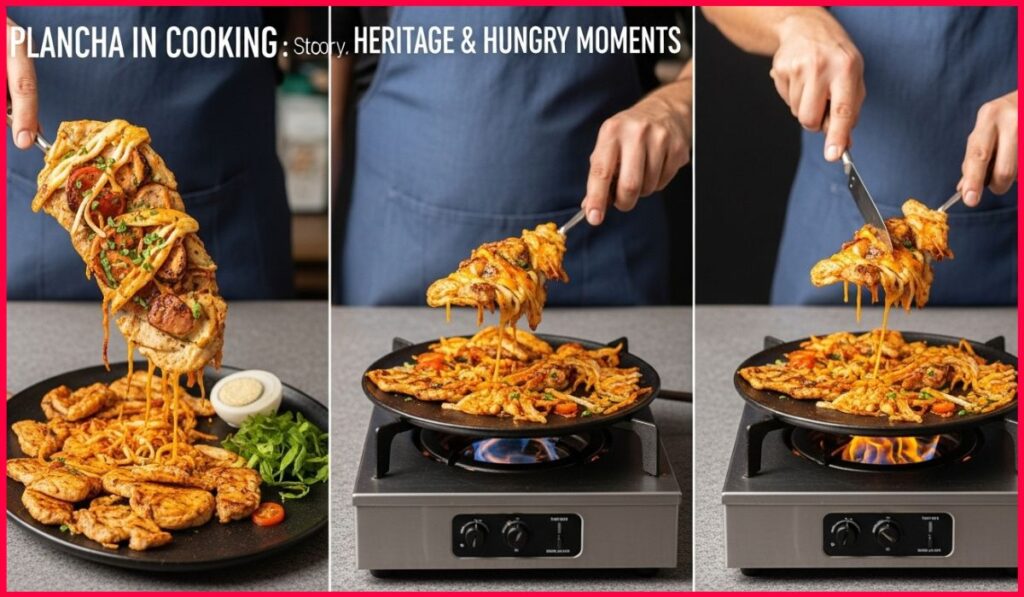
There’s something magical about cooking on a plancha in cooking settings. The heat is direct but somehow gentle, the sizzling is loud but comforting, and the flavors—my goodness, they cling to the food the way memories cling to your senses.
If you ever visit a Spanish coastal village you’ll probably see elders cooking fish a la plancha during local cultural events or food festivals, proudly guarding their traditional seasoning secrets. The method is delightfully simple: fresh fish, salt, olive oil, fire, and patience. No marinating for eight hours. No fifty-ingredient sauces. Just simplicity with confidence.
The plancha plate retains heat so beautifully that chefs in fine-dining restaurants adore it. It supports eco-friendly cooking, encourages low-oil cooking, and keeps things natural. No fuss. No drama. Just flavor.
A chef once told me, “Food doesn’t need luxury, it needs respect.” And honestly, that’s the whole soul of cooking a la plancha.
The Household Plancha: A Flat Iron with Flat-Out History
In many Latin American and Spanish homes, the word plancha means something much more humble: the household appliance we use for ironing clothes. If you grew up in a Spanish-speaking home, it’s totally normal to hear someone yell from the hallway, “¿Dónde está la plancha?” meaning, “Where on earth is the iron?” (because let’s accept it—irons literally vanish.)
For international learners, this can get confusing. Why does the same word refer to a cooking surface and a heated clothing tool? The reason is simple: both are flat, hot, and pressed surfaces. Language doesn’t like to waste good words, so it just… reuses them.
There’s even a playful Spanish phrase: hacer la plancha. It can mean to lie flat, to do nothing, or even float on water like you’re pretending to be a relaxed tortilla chip. That’s language for you—beautifully unserious.
Read this blog: https://noshcrafters.com/luman-meaning/
Plancha Exercise: Strength, Stillness, and a Slightly Shaking Body
At the gym, the plancha exercise hits completely different. Trainers love to include it in fitness routines because it builds body alignment, makes your core cry a little, and teaches discipline. It’s basically a plank exercise but harder, steadier, and usually approached with a “why do I do this to myself?” face.
The posture requires your whole body to hover in a straight line. Everything wakes up—your shoulders, your arms, your spine, even your toes feel like they joined the army.
People debate whether it’s the best abs strengthening move ever invented, but honestly, it works. You feel taller… and mildly heroic afterward.
Cultural Expressions & Borrowed Words: The Linguistic Journey of Plancha
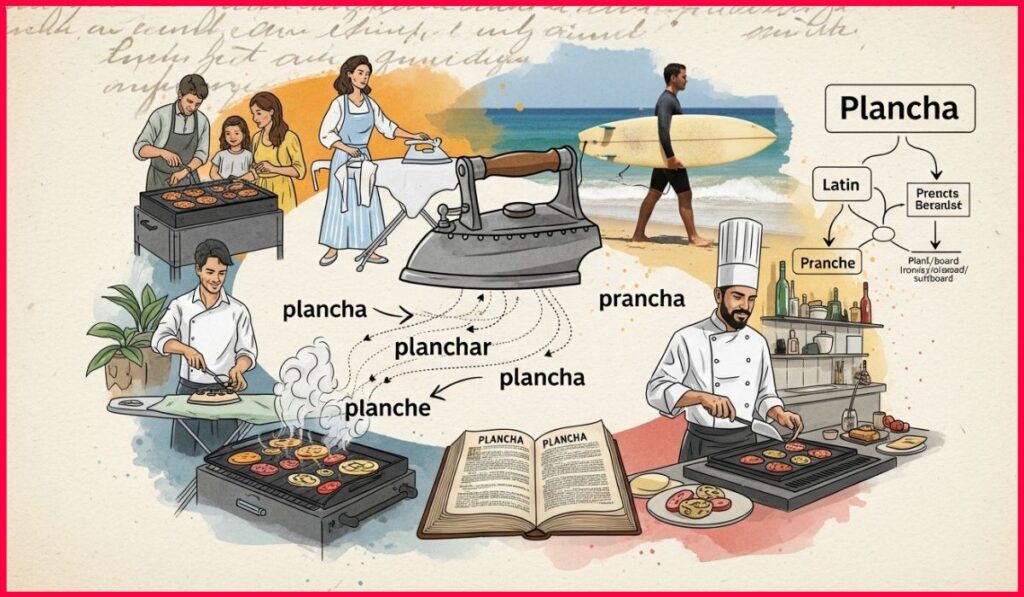
Languages borrow, steal, remix, and recycle words without guilt. The word plancha traveled from Spain into Latin America, then sneaked into English kitchens, gyms, and travel blogs. It lives in idioms, recipes, and even in text messages.
Understanding borrowed Spanish words helps us see the beauty of language evolution. Words aren’t frozen. They wander like travelers picking up souvenirs.
In Spanish idioms like hacer la plancha, the phrase becomes a relaxed emotional symbol—resting, floating, stopping effort. And strangely, this meaning almost dances with the meaning of hiatus, which we’ll explore soon. Language is full of these magical coincidences that aren’t coincidences at all—they’re cultural fingerprints.
Hiatus Meaning: A Pause with Personality
Now let’s invite the second star of our show: hiatus. This word sounds elegant, polished… almost like it wears glasses and reads literature in cafés.
The hiatus meaning simply refers to a break, pause, or rest period in something ongoing. But if you ask people, they often explain it with feelings instead of textbook definitions.
In entertainment, a mid-season hiatus or winter hiatus is that annoying moment when your favorite TV show suddenly disappears for a while, leaving you staring at the screen like it owes you money. This kind of series interruption is famous in Hollywood schedules.
In academics, students talk about academic break, break from university, or even a longer sabbatical. In workplaces, employees sometimes need a work pause, leave of absence, or downtime—maybe because life is too loud for a minute and the soul requests an interlude.
In medicine, you might hear about the esophageal hiatus, a natural opening in the diaphragm. Different world entirely—but same word, same root meaning: an opening, a gap, an interval.
And what about personal life? People take emotional intermissions, mental cooling-off periods, or simple time off just to breathe. The word hiatus feels almost therapeutic. Like permission to stop for a moment.
Expression Alternatives for Hiatus: When You Need a Softer or Stronger Tone
Different situations call for different wording. If you’re sending a professional tone email, you might write, “I’ll be taking a short pause from work.”
In a more casual tone with friends, maybe you say, “I just need a tiny break from everything.” For academia, “I’m taking a leave of absence,” works beautifully.
For creative writing or storytelling, “an interlude” sounds poetic.
For drama lovers, “a temporary intermission” adds flair.
These expression alternatives help shape our emotional clarity. Language isn’t only communication—it’s survival.
Texting, Typos & The Odd Case of Stand for AND
Ever typed something like “plancha” when you meant “plan,” or “stand for AND” when your phone decided to “correct” you into chaos? Welcome to the modern world of autocorrect error, texting abbreviations, and the frantic deleting-and-retyping that fills our everyday conversation.
Words shift meanings in the digital world faster than we notice. A phrase might represent values one day and become a meme the next. And yes, texting is the birthplace of beautiful typos that sometimes become trends.
Language, like humans, is delightfully messy.
Plancha, Hiatus & Culture: How They Unexpectedly Connect
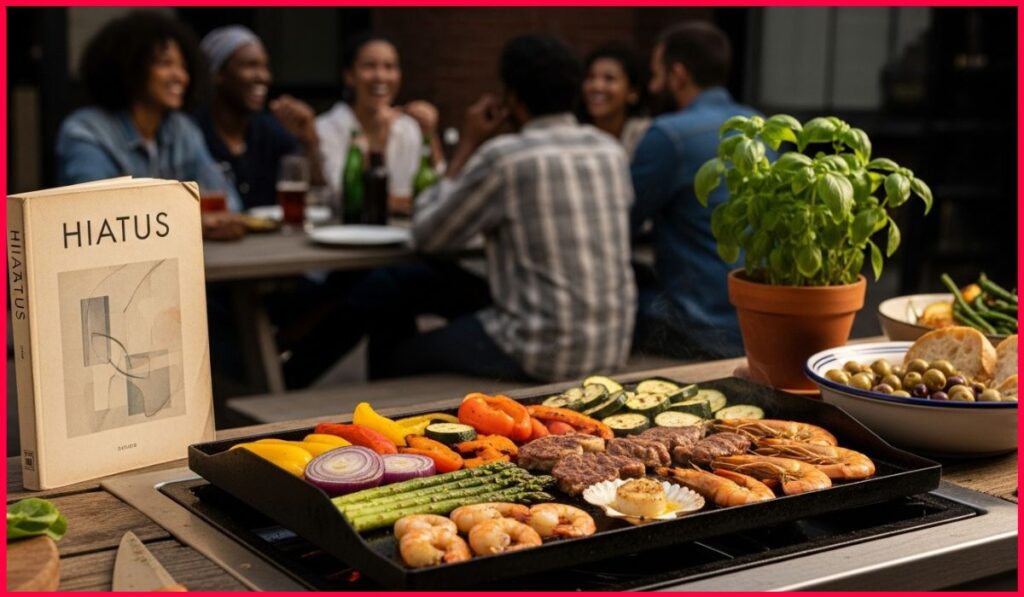
It sounds odd, right? That plancha and hiatus share something. But they do.
Plancha is heat, pressure, fire, discipline, sizzling sound, movement.
Hiatus is rest, emptiness, space, coolness, silence, stillness.
One pushes forward; the other steps back.
One energizes; the other stabilizes.
Both essential. Both human.
In cooking, the pan rests between uses—a mini hiatus.
In ironing, steam cools down before the next shirt.
In exercise, you pause between reps.
In language, your mind pauses before choosing the right word. Life swings between these two forces every day.
Conclusion
So here we are at the end of this little journey—where the sizzling plancha cooking moments meet the gentle quiet of a hiatus. If there’s anything to take from this, it’s that words carry worlds, and those worlds often match the rhythms of our own lives.

Food lover, recipe creator & the heart behind NoshCrafters.com. Olivia shares mouthwatering, easy-to-make dishes that turn everyday meals into unforgettable bites. When she’s not experimenting in the kitchen, she’s busy plating up inspiration for home cooks everywhere.